
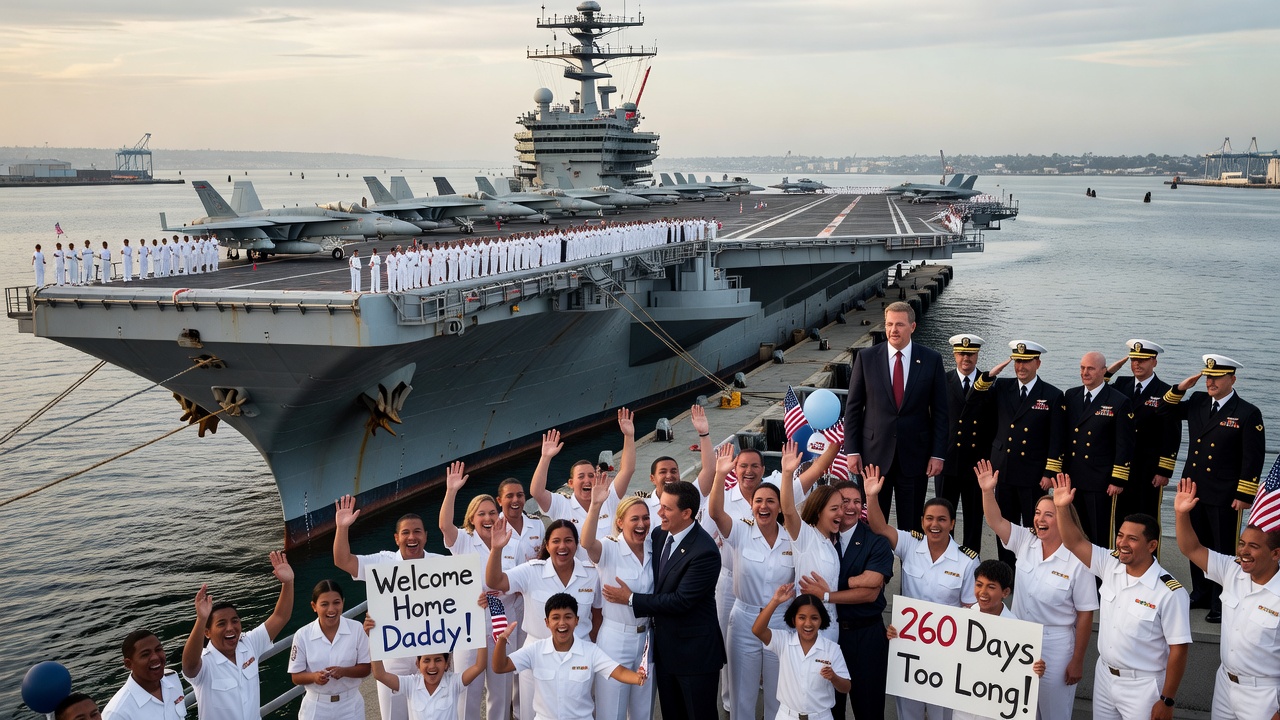
Two hundred and sixty consecutive days without a single port call. That is the span the USS Abraham Lincoln and its strike group spent at sea before finally returning to San Diego, closing out a deployment that stretched nearly ten months and drew the carrier directly into sustained operations against Iran. The homecoming marks the end of one of the longer and more operationally intense carrier deployments in recent memory, and it brings into focus the human and logistical costs that accompany modern naval warfare.
A Deployment Defined by Duration and Intensity
Carrier deployments typically run on a rotational schedule designed to balance operational readiness with crew welfare, usually including scheduled port visits that give sailors a break from the confined, high-tempo environment of a warship. The Abraham Lincoln's deployment departed sharply from that pattern. Defense Secretary Pete Hegseth detailed the scale of what the strike group accomplished: thousands of combat sorties flown and hundreds of Tomahawk missile launches carried out in support of operations against Iran. Sustaining that pace without a break at port is unusual, and it reflects the operational demands placed on the carrier as tensions with Iran escalated across the region.
The Toll of Prolonged Time at Sea
Extended deployments carry consequences that extend well beyond fuel and munitions. The Navy reported eight suicide attempts among sailors in the carrier strike group during the deployment, a figure that underscores how prolonged separation from family, continuous combat operations and the absence of normal breaks can strain mental health even among trained service members. Military leadership has acknowledged for years that deployment length and operational tempo are directly linked to crew wellbeing, and incidents like these tend to renew scrutiny of how the Pentagon manages rotation schedules, mental health resources aboard ship, and support systems for families left behind.
Regional Stakes and Wider Consequences
The carrier's mission was not an isolated exercise. It took place against the backdrop of an active U.S.-Iran conflict that continues to shape security dynamics across the Middle East and ripple into global energy markets, where shipping routes and oil supply lines remain sensitive to any shift in regional stability. A carrier strike group operating without interruption for that long signals sustained concern at the Pentagon about deterrence and readiness in the Gulf, even as it raises questions about how long the Navy can maintain that pace without accelerating wear on both ships and personnel.
What Comes Next
With the Abraham Lincoln back in San Diego, sailors are reuniting with families after a deployment that tested the limits of endurance at sea. For the Navy, the return opens a period of maintenance, retraining and, likely, internal review of how the deployment's length affected crew welfare. The broader conflict with Iran has not resolved, meaning questions about future deployments, rotation planning and support for service members remain very much open.