
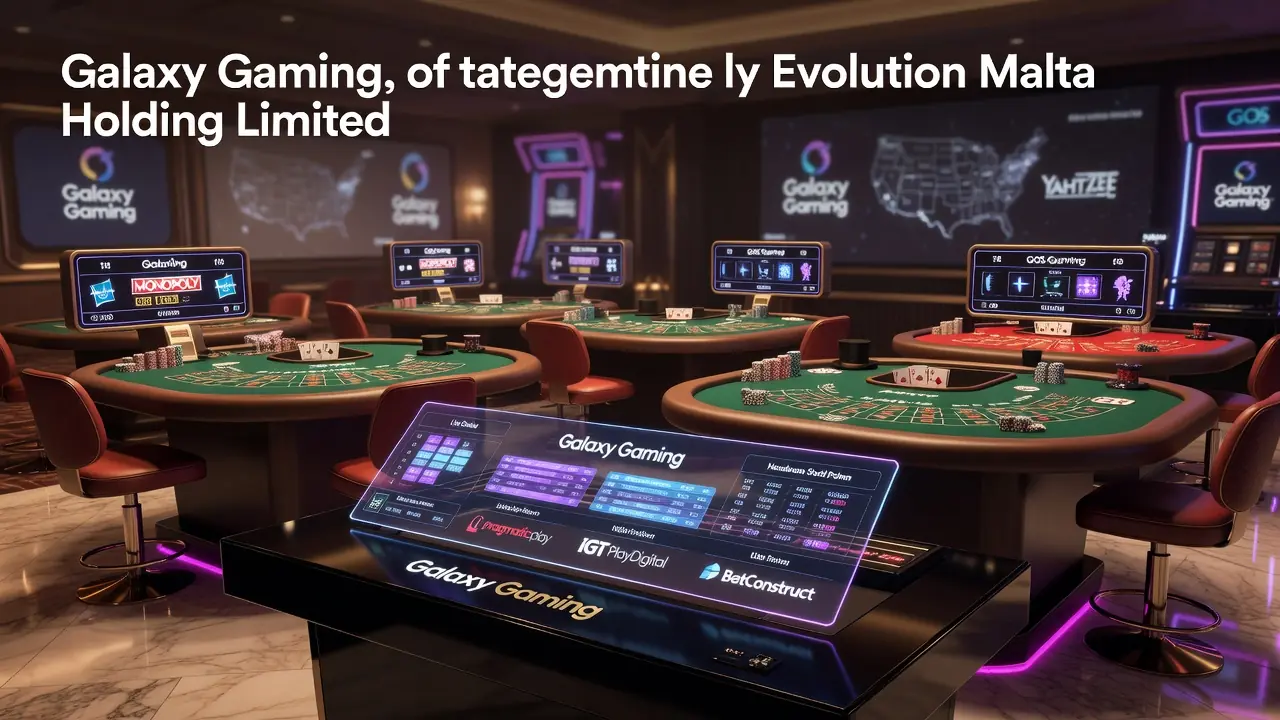
A Las Vegas-based company that most casino visitors have never heard of sits behind many of the side bets and branded card games dealt at tables worldwide. Galaxy Gaming, Inc., trading under the ticker GLXZ on the OTCQB Marketplace, is moving toward a change of ownership that would fold it into Evolution Malta Holding Limited, one of the largest names in live-dealer gaming. The deal, structured as a merger, has had its closing deadline pushed to July 17, 2026, underscoring how long regulatory review can stretch in the gaming industry.
A Content Supplier, Not a Casino Operator
Galaxy Gaming does not run casinos. It designs and licenses the table games, side bets, and progressive systems that operators install on their floors and digital platforms. This distinction matters: companies like Galaxy sit in the business-to-business layer of gambling, supplying intellectual property and technology rather than taking bets directly from consumers. Its catalog includes well-known blackjack variants such as 21+3 and Lucky Ladies, poker-adjacent games like Caribbean Stud Poker and Heads Up Hold'em, and baccarat enhancements marketed under names such as EZ Baccarat. A licensing arrangement with Hasbro has also allowed the company to adapt consumer board games, including MONOPOLY and YAHTZEE, into casino pit formats, blending brand recognition with gambling mechanics.
Technology Layer: Progressives, Sensors, and Table Management
Beyond game content, Galaxy Gaming promotes a technology stack built around its Galaxy Operating System, branded GOS Sapphire. This platform is positioned as infrastructure for operators to manage progressive jackpots, track play through sensor technology, and deliver features like randomized multiplier payouts on certain progressives. These systems illustrate a broader trend in land-based gambling: table games, long seen as analog compared to slot machines, are increasingly wired with electronic tracking and dynamic bonusing. For regulators, this raises familiar questions about how jackpot odds and payout structures are disclosed and audited, since added complexity in bonusing mechanics can make outcomes harder for players to evaluate at a glance.
Digital Distribution and the Online Gaming Shift
Through its Galaxy Gaming Digital division, the company licenses its table game intellectual property to online operators, a segment that has become central to its business model as gambling activity migrates to iGaming platforms. Partnerships with providers such as Pragmatic Play, IGT PlayDigital, and BetConstruct allow Galaxy-branded games to appear across live-dealer and random-number-generator formats operated by third parties. This licensing structure is typical of how modern gambling content spreads: a single game concept, once approved in one jurisdiction, can be replicated across many platforms through B2B contracts rather than direct consumer-facing launches.
- Operates as a licensor rather than an operator, supplying content to casinos and online platforms
- Holds licenses across numerous U.S. states and international jurisdictions, reflecting the fragmented nature of gambling regulation
- Depends on third-party platforms for online distribution, meaning its reach is tied to partner relationships
- Faces a pending acquisition that remains conditional on gaming regulatory approval
Why the Evolution Deal Matters
If completed, the merger would absorb an independent table game developer into a much larger live-dealer and gaming technology group, a pattern consistent with ongoing consolidation across the gambling supply chain. For operators and players, such consolidation can mean fewer independent content sources over time, even as game variety on the surface appears to grow. For regulators, mergers of this kind trigger fresh scrutiny of licensing, ownership structure, and market concentration in jurisdictions where both companies hold approvals. The company has been explicit that completion is not guaranteed and remains contingent on regulatory sign-off, a reminder that gaming industry mergers often move on a slower timeline than traditional corporate deals due to the layered approval processes gambling regulators require.