
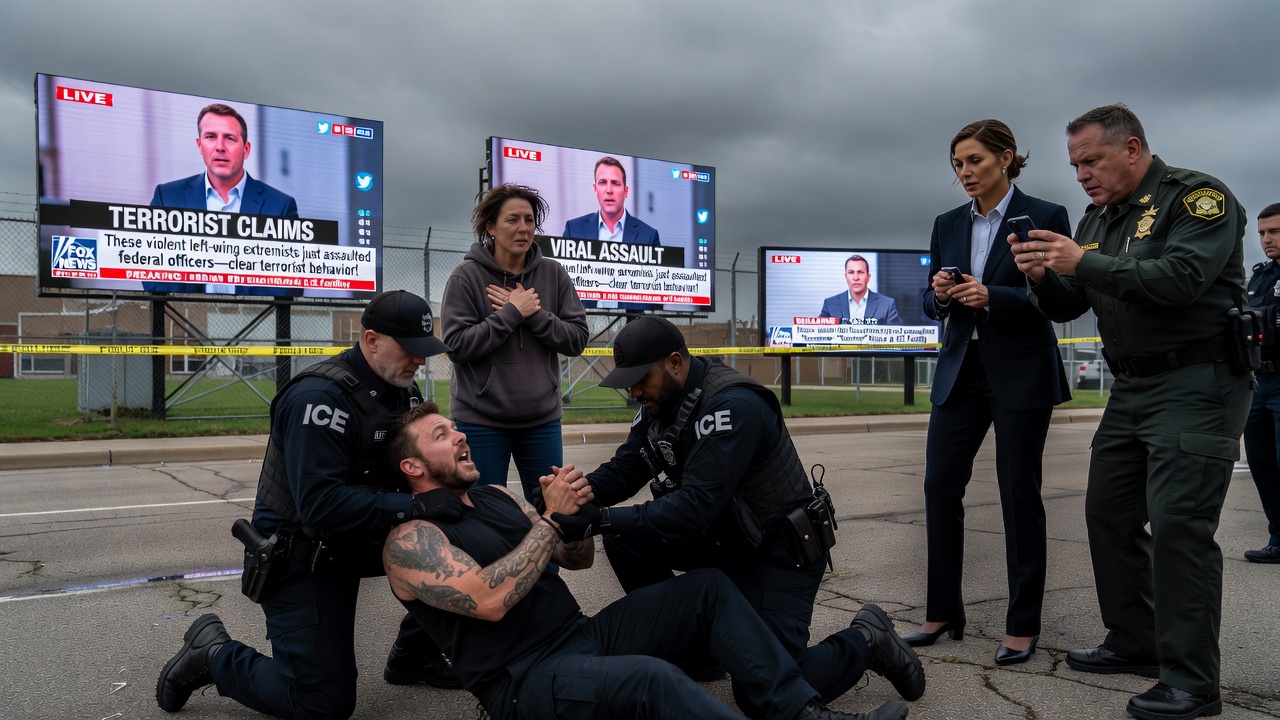
Two protesters detained outside an immigration enforcement facility in Broadview, Illinois, are suing media personality Benny Johnson for defamation, arguing he knowingly mischaracterized them as violent extremists to a national audience. The lawsuit, filed Friday, centers on videos Johnson recorded while embedded with then-Homeland Security Secretary Kristi Noem and then-Border Patrol commander Gregory Bovino, in which he claimed the detainees had assaulted federal officers. Neither Kyle Frankovich nor Maureen Foody was ever charged with a crime.
What the Footage Actually Showed
According to the complaint, Frankovich was filming ICE agents from a designated protest zone when he was thrown to the ground and zip-tied. Johnson's video, which circulated widely on social platforms and was later broadcast on Fox News, described the detained individuals as having assaulted officers - a characterization the plaintiffs say Johnson knew to be false. Images of Frankovich, restrained and visibly tattooed, subsequently appeared in ICE recruitment material, amplifying the reach of the claim well beyond Johnson's own audience.
The Mechanics of Influencer-Driven Narratives
This case illustrates a structural shift in how political and government messaging now travels. Embedding sympathetic content creators directly alongside law enforcement officials during operations gives those creators privileged access and a built-in narrative frame, often without the editorial checks traditional broadcast journalism applies before publication. Once footage is online, correction is nearly impossible: algorithms reward early engagement, and a false label - "left-wing terrorist" - can outrun any retraction. Rachel Goodman of Protect Democracy, which has litigated related cases but is not party to this one, described this as part of a broader strategy of working with ideologically aligned influencers to shape the information environment while sidelining independent media scrutiny.
Real-World Harm From Online Mislabeling
Frankovich says he has since been falsely identified online as an antifa organizer, prompting threats specific enough that he and his partner now avoid walking alone. That trajectory - from viral clip to targeted harassment campaign - is a recognizable pattern in digital defamation cases, where speed and scale of distribution convert a single misleading claim into sustained personal risk. The plaintiffs argue that reputational and professional damage, not just emotional distress, flows directly from being falsely tied to violence against federal officers.
Why the Legal Theory Matters
Federal officials generally enjoy immunity from defamation claims tied to their official conduct, which is why this suit targets Johnson rather than Noem or Bovino directly. Attorney Karianne Jones, representing the plaintiffs through Evergreen Legal Strategies, framed the case as a test of whether independent commentators who amplify government operations can be held to the same standards as traditional reporters when their claims are demonstrably false. The outcome could influence how closely media figures embedded in enforcement operations scrutinize the claims they broadcast - and whether platforms and advertisers treat such content differently going forward.