
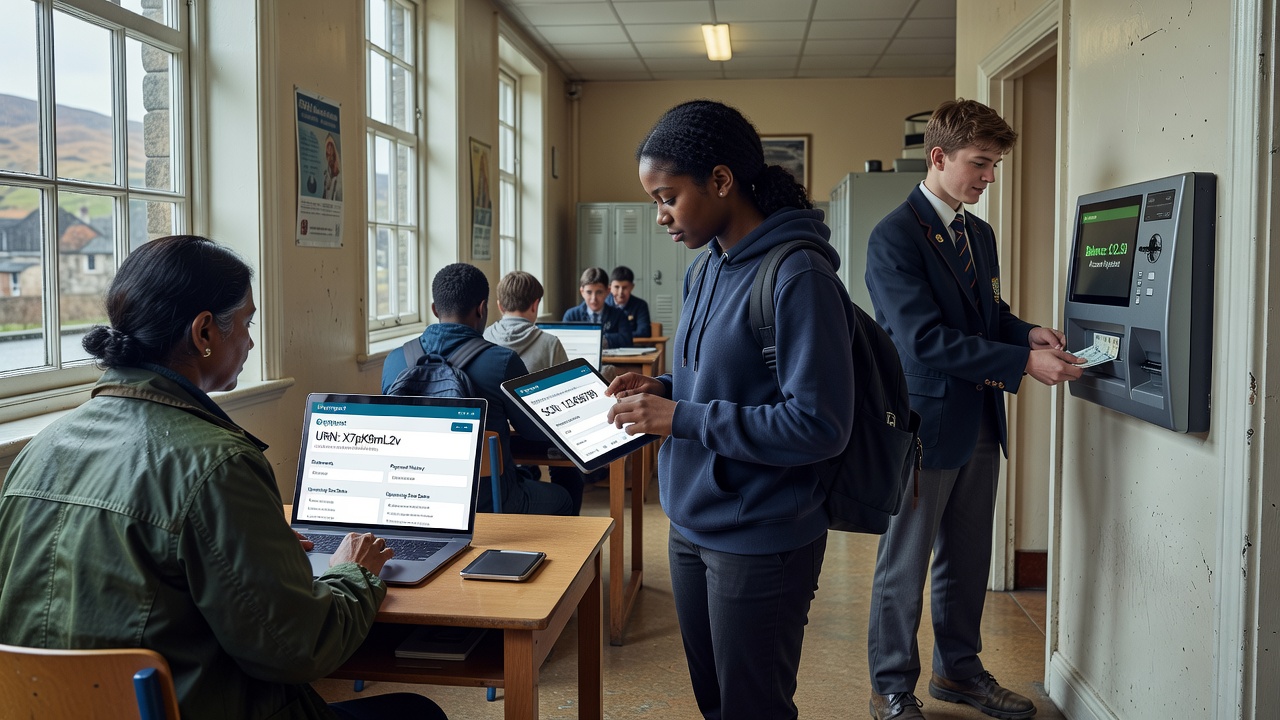
Paying for a child's school lunches has become a matter of matching the right identifier to the right payment channel. Highland Council has set out a dual-track system built around two distinct reference numbers, each tied to a different online payment route, alongside the option to pay in person through the school itself. The arrangement reflects a broader pattern across UK local authorities, where digital payment platforms are gradually replacing cash handling in schools without fully retiring it.
Two Reference Numbers, Two Payment Routes
The system hinges on which identifier a family has been given. Schools that issue a Unique Reference Number (URN) direct parents toward iPayimpact, a platform that lets account holders view statements, track payment history, and monitor when the next payment falls due. A URN combines uppercase and lowercase letters with numbers.
Where no URN has been issued, parents instead use their child's Scottish Candidate Number (SCN), a nine-digit code more commonly associated with exam registration than meal payments. This route allows online payment but does not offer the same account visibility. Parents using an SCN cannot check balance information online, a gap that distinguishes it clearly from the URN-based system.
Why the Distinction Matters
This split-system approach is not unusual in public-sector payment infrastructure, where local authorities often integrate multiple platforms rather than commission a single unified tool. The trade-off is functional rather than cosmetic: families with a URN get fuller financial oversight, while SCN users get basic payment capability without the reporting layer. For parents managing household budgets or monitoring a child's spending, that difference in transparency is meaningful, particularly for secondary pupils who may top up their own accounts.
Secondary school pupils have an additional option unavailable to younger children: a revaluation unit based in school, where they can add cash directly to their meal account and check its balance in person. This gives older pupils a degree of financial independence while keeping a physical, school-based checkpoint for cash transactions.
Cash, Cheques and Outstanding Invoices
Despite the digital push, Highland Council has kept traditional payment methods available. Cash and cheques can still be handled through the school, with cheques made payable to The Highland Council. Parents who receive an invoice for outstanding meal charges can settle it online, which suggests the council is steering arrears recovery toward digital channels even where day-to-day payments remain cash-based.
This blended model, digital-first but not digital-only, is common among public bodies managing services for diverse households, some without consistent internet access or banking apps. Maintaining cash and cheque options alongside online platforms reduces the risk of excluding families less comfortable with digital payments, a consideration increasingly relevant as more council services migrate online.
Where Parents Can Get Help
For anything beyond routine payment, linking a child's account, requesting a refund, or resolving a query, Catering Services is the designated point of contact. Centralising support in one team, rather than leaving parents to navigate platform-specific helplines, is a practical choice that reduces friction when something goes wrong, whether that is a mismatched reference number or a payment that has not registered correctly.