
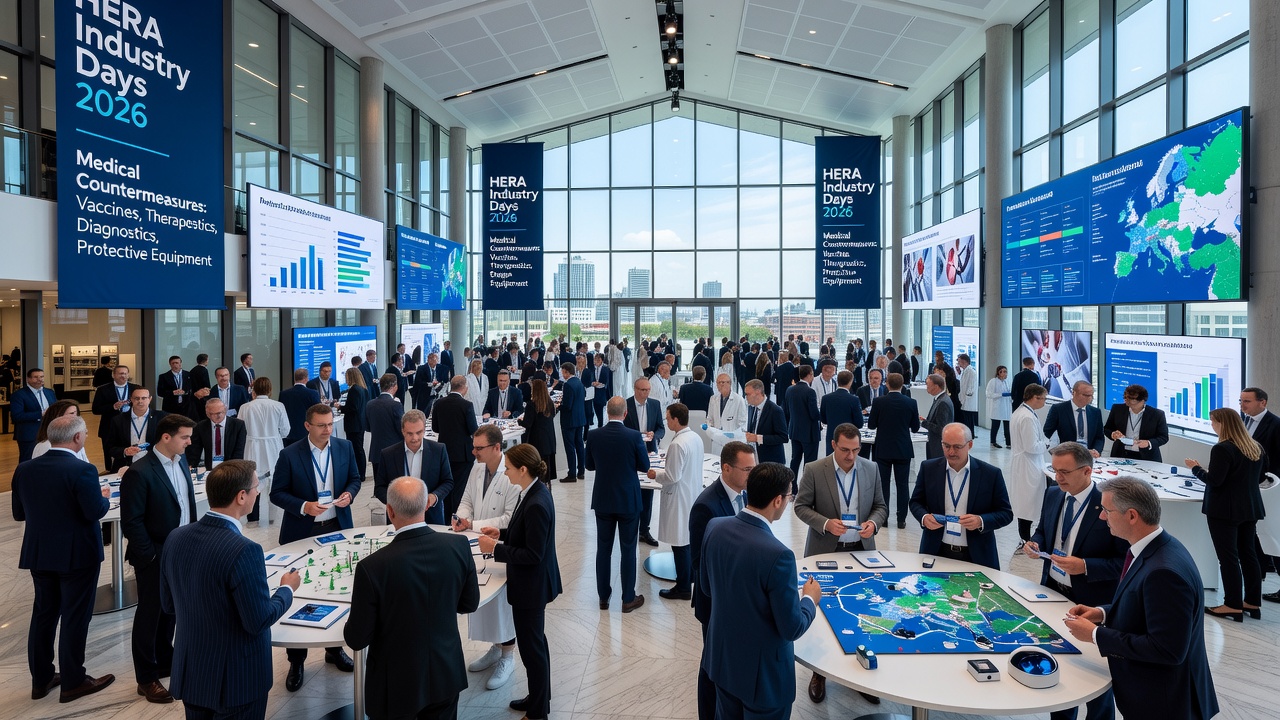
The European Union's health emergency authority, DG HERA, is preparing its annual flagship gathering for 2026, bringing together pharmaceutical executives, research institutions, EU officials, start-ups and national public health bodies under one roof. The event, known as HERA Industry Days, has become the bloc's principal forum for coordinating work on medical countermeasures - the vaccines, therapeutics, diagnostics and protective equipment that governments rely on when health crises strike.
Why This Forum Exists
The Health Emergency Preparedness and Response Authority, or HERA, was established within the European Commission to address a structural weakness exposed by recent global health emergencies: the EU's dependence on fragmented national responses and, in some cases, on manufacturing capacity located outside Europe. Its mandate covers anticipating threats, funding research, and ensuring that medical supplies can be produced, stockpiled and distributed quickly across member states. Industry Days functions as the connective tissue for that mission, giving companies and researchers direct access to the institution shaping procurement rules, funding calls and preparedness strategy.
What Gets Discussed
Sessions typically center on a handful of recurring themes that matter to anyone operating in biotech, medtech or public health logistics.
- EU-wide preparedness planning and how it translates into procurement and stockpiling decisions
- Funding mechanisms available to companies developing vaccines, treatments and diagnostic tools
- Public-private cooperation models, including how start-ups can engage with EU institutions
- Longer-term health security priorities that will shape future investment and regulation
These are not abstract policy debates. Decisions made in this space determine which companies receive development contracts, which technologies get fast-tracked for regulatory review, and how quickly Europe could respond if a new pathogen, biological threat or supply disruption emerged.
Why It Matters Beyond the Room
Health preparedness has shifted from a niche public-health concern to a strategic policy priority across Europe, sitting alongside energy security and digital sovereignty on the list of resilience issues governments now treat as core business. For biotech firms and medtech innovators, direct dialogue with HERA offers a rare line of sight into where EU funding and regulatory attention will flow next. For start-ups in particular, the networking dimension of the event can matter as much as the formal agenda, since early relationships with public authorities often determine whether a promising technology reaches the pilot stage or stalls for lack of institutional backing.
The broader implication is one of coordination. A Europe that can align its research base, manufacturing capacity and emergency funding before a crisis hits is better positioned than one scrambling to negotiate contracts under pressure. Industry Days is, in that sense, as much an exercise in building trust between sectors as it is a conference agenda.