
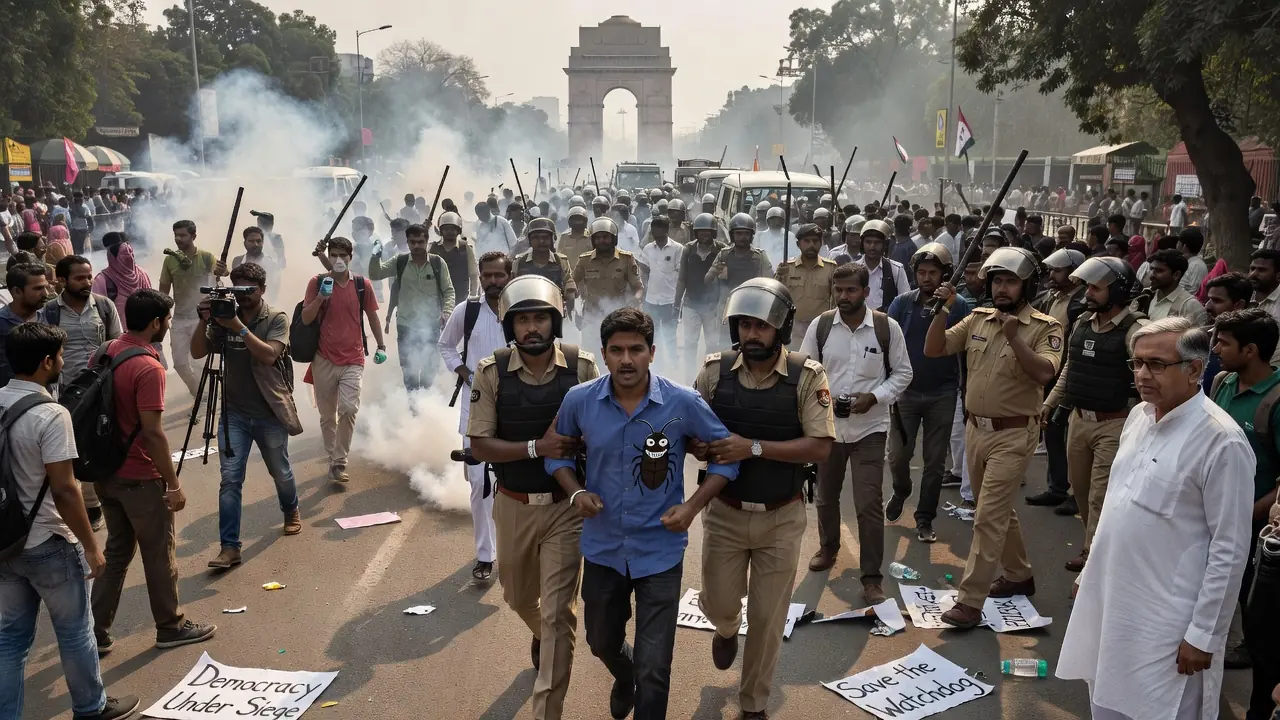
Delhi police detained hundreds of demonstrators, including Cockroach Janta Party founder Abhijeet Dipke, to stop a rally demanding the resignation of India's chief election commissioner. The operation involved a large security deployment, suspended transport links, and disrupted telecommunications across parts of the capital. At the centre of the dispute is a contentious overhaul of India's voter rolls that critics say has stripped millions of eligible citizens of their right to vote.
What the voter list revision actually does
The Special Intensive Revision, launched last year, shifts the burden of proof onto existing voters rather than election authorities. People must produce decades-old documents - birth records, land papers, school certificates - to stay on the rolls. A clerical error, a misspelled name, or a missing document can be enough to remove someone who has voted for years. Because welfare entitlements in India are frequently linked to voter registration, disenfranchisement carries consequences well beyond the ballot box. Opposition parties say the exercise has disproportionately affected poorer, migrant, and Muslim communities in states such as West Bengal, Bihar, Assam, and Delhi, and argue the pattern of deletions has benefited the governing Bharatiya Janata Party in recent state elections.
A protest movement born from a dismissive remark
The Cockroach Janta Party emerged in May as a satirical response to a comment from India's Chief Justice comparing unemployed youth to "cockroaches." What began as an online joke became a youth-led pressure campaign with real political consequences: street protests over exam-system failures led to the resignation of the education minister in July. The group's current target, Chief Election Commissioner Gyanesh Kumar, has become a symbol for broader anxieties about the independence of India's electoral machinery. A former election commissioner has described the institution as having lost public trust after decades of reputation-building.
Detentions, press access, and the shrinking space for dissent
Amnesty International has accused Delhi authorities of mass detentions intended to create "a climate of fear," citing reports that thousands of people - including opposition politicians, student leaders, journalists, and lawyers - were taken into custody. The Committee to Protect Journalists separately raised concerns about reporters being detained and equipment confiscated while covering the demonstrations. Government spokespeople have dismissed the protesters as "anarchic elements" disconnected from the country's broader stability, while opposition figures, including Congress parliamentarian Shashi Tharoor, have framed the crackdown as evidence of democratic backsliding.
Why this matters beyond Delhi
The clash illustrates a tension playing out in many democracies: when electoral administration is questioned, the credibility of the response - not just the policy itself - becomes the story. Mass detentions, communication shutdowns, and restricted press access tend to amplify scrutiny rather than suppress it, particularly when documented by international rights organisations. With the matter now before India's Supreme Court, the outcome will likely shape public confidence in the Election Commission well beyond this single protest cycle.