
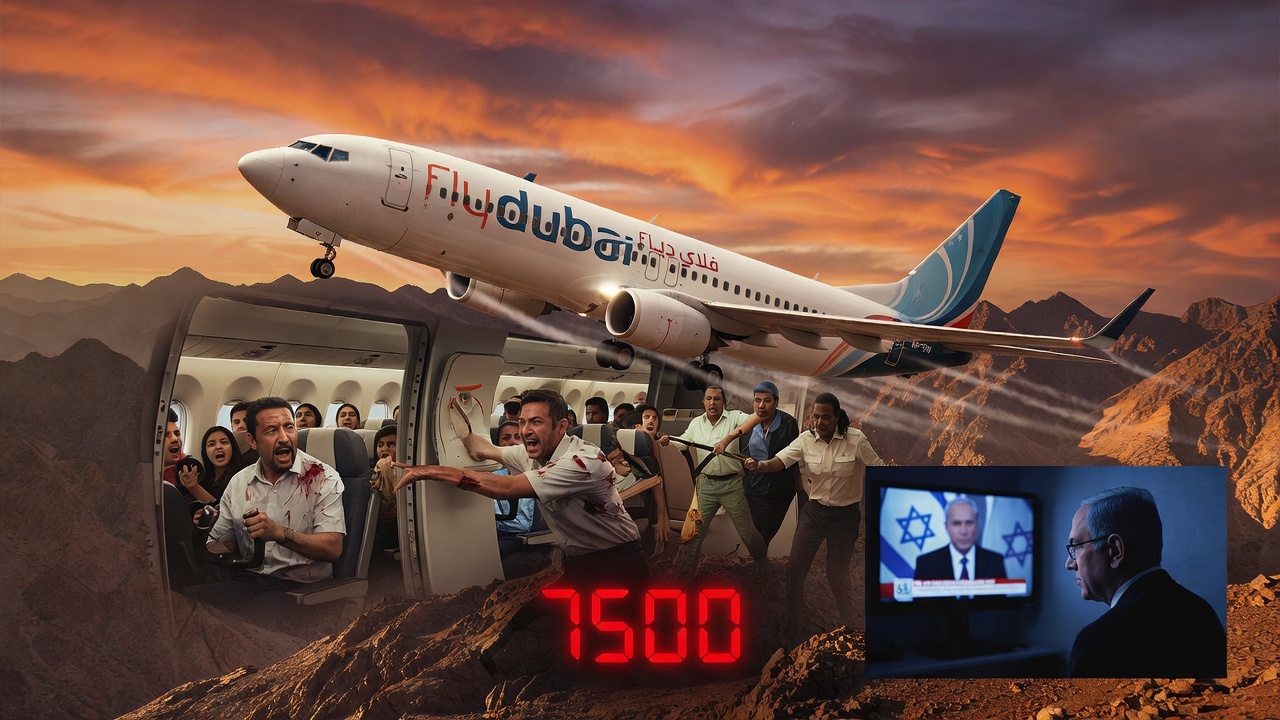
A Flydubai service linking Dubai to Tel Aviv was forced into a dramatic emergency diversion after a violent altercation broke out between the two pilots operating flight FZ1073. The aircraft broadcast squawk code 7500, the international signal for unlawful interference, and plunged nearly 14,000 feet in under half a minute before landing safely in Tabuk, Saudi Arabia. The episode has drawn urgent attention from Israeli officials, including Prime Minister Benjamin Netanyahu, who characterized it as a serious security incident.
What the Emergency Signal Reveals
Squawk 7500 is not used lightly. Pilots reserve it for situations involving hijacking or forced cockpit intrusion, and its transmission automatically alerts air traffic control networks and national security agencies across multiple jurisdictions. The fact that FZ1073 triggered this code, combined with a near-vertical descent rate, points to a crew attempting to regain control of the aircraft under extreme duress rather than a conventional technical fault. Reports indicate one pilot was stabbed in the cockpit, with passengers and cabin crew stepping in to subdue the individual responsible, a detail that underscores how quickly a routine commercial flight can turn into a life-threatening scenario for everyone aboard.
Why Aviation Security Protocols Matter Here
Commercial aviation relies on layered defenses: reinforced cockpit doors, two-person cockpit rules in many jurisdictions, psychological screening of flight crew, and rapid-response coordination between airlines and regional air traffic authorities. This incident will almost certainly prompt scrutiny of how those safeguards functioned, or failed to, in real time. Israeli politician Sharon Haskel has confirmed the matter is now under investigation by authorities in both Saudi Arabia and the United Arab Emirates, reflecting the cross-border complexity of any inquiry involving an airline registered in one country, a flight path crossing several others, and a diversion landing in a third.
Diversion, Rescue, and the Human Dimension
Passengers were left stranded in Tabuk following the emergency landing until a separate rescue flight arrived to bring them safely to Tel Aviv. For those aboard, the ordeal did not end with the plane touching down safely; it continued through hours of uncertainty on the ground in a foreign airport before reaching their original destination. Airlines facing incidents of this nature typically face parallel obligations: supporting affected passengers and crew, cooperating with multiple national investigators, and managing public disclosure carefully while facts are still being established.
What Remains Unconfirmed
Characterizations of the event as an attempted terror attack, including claims that the co-pilot intended to crash the aircraft, have come from Israeli officials rather than from a completed investigative finding. Formal conclusions will depend on the joint inquiry now underway involving Saudi and Emirati authorities, and details such as motive, mental state, or any wider conspiracy should be treated as provisional until those findings are published. Incidents of this severity tend to attract early political framing well before technical and criminal investigations are complete, and the distance between the two should not be overlooked.